Yoga Classes
in Crest, Drôme region
Transmission is at the heart of my life: mother at 24 and 28, teacher since the age of 21, teacher trainer, researcher in language and education sciences, grandmother at 54 and yoga teacher!
Learning continues to open up my horizons every day...
Dynamic Yoga
Ashtanga Vinyasa Yoga
Ashtanga Vinyasa Yoga is a dynamic form of yoga developed in the 1960s in Mysore, South India, by Sri Pattabhi Jois, a disciple of Sri Tirumalai Krishnamacharya, considered the father of modern postural yoga.
Pattabhi Jois developed the Ashtanga Yoga method, structured in sequences of postures known as series. The postures, or asanas in Sanskrit, are performed and memorized in a precise and progressive order, in coordination with the breath. The combination of asana stability (each posture is held for 5 to 8 breaths) and the fluidity of movement, or Vinyasa, makes this practice an inivitation to journey through the cycles of the cosmos, between inhalation and exhalation. It promotes grounding, power and relaxation, uniting body and mind in an unlimited space-time.
Each series 1st series Yoga Chikitsa (therapeutic), 2nd series Nadi Sodhana, 3rd series Sthira Bhaga presents a series of postures progressively and coherently for their physical, energetic and psychological effects. The series is organized into several parts: (1) Ashtanga sun salutations A and B, (2) standing postures common to all series and constituting the foundation of the practice, (3) the unique postures of each series (standing, seated, balancing, etc.), and (4) the final postures common to all series, from the bridge posture Urdhva Dhanurasana up to the relaxation posture Savasana.
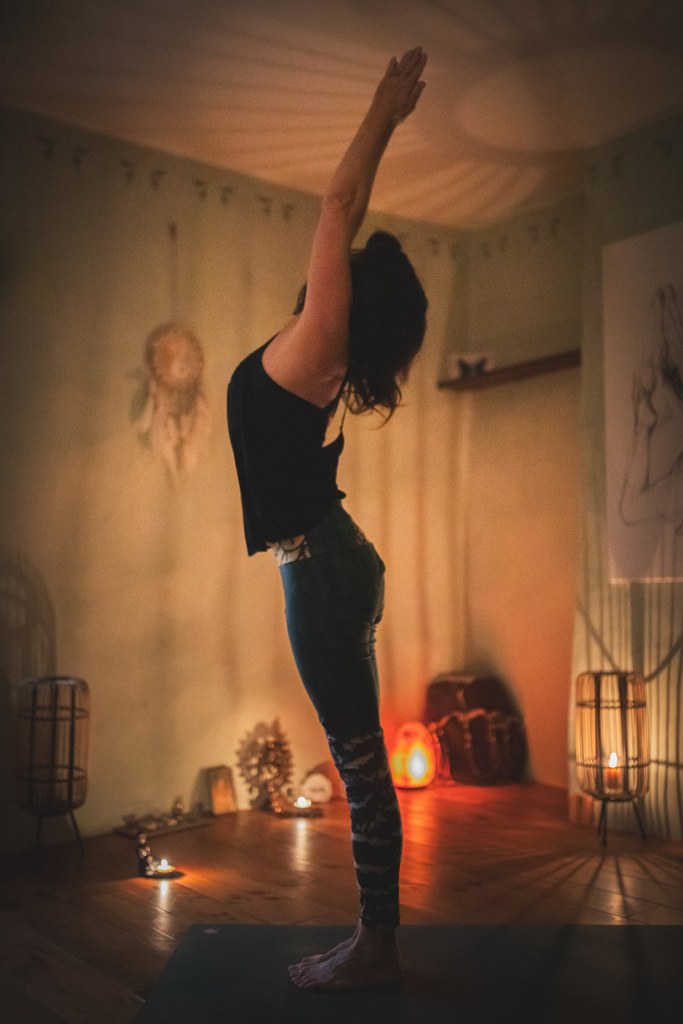
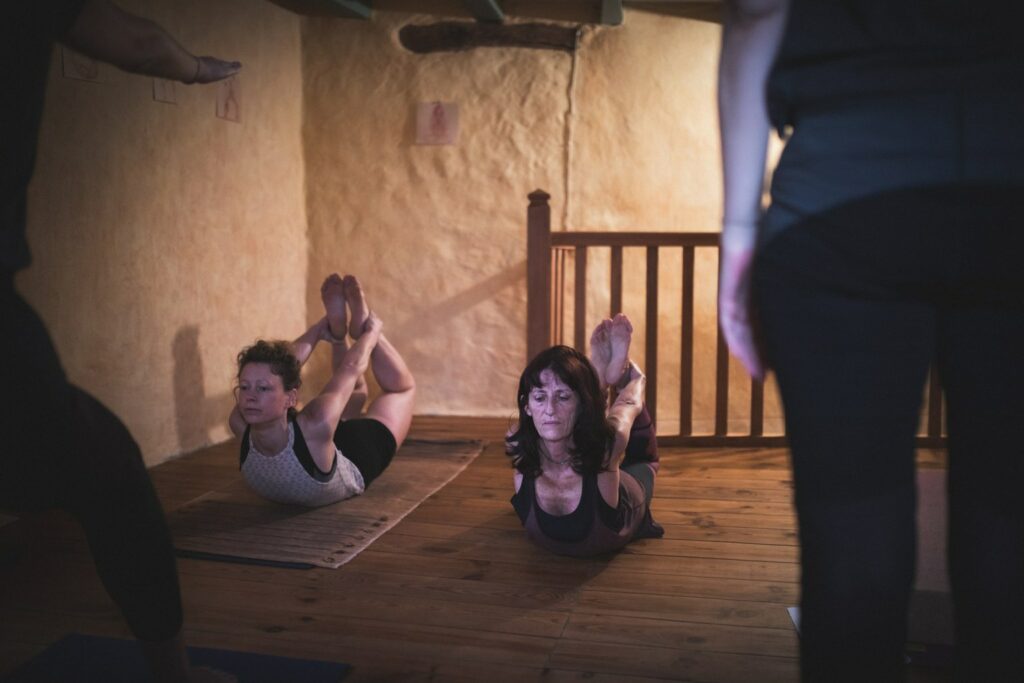
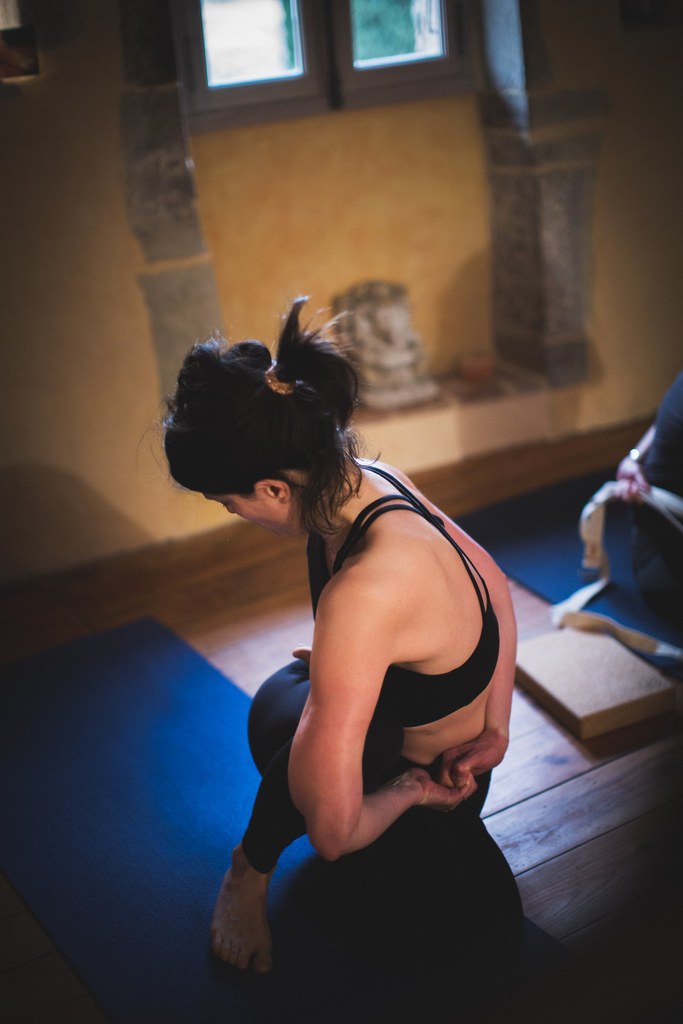
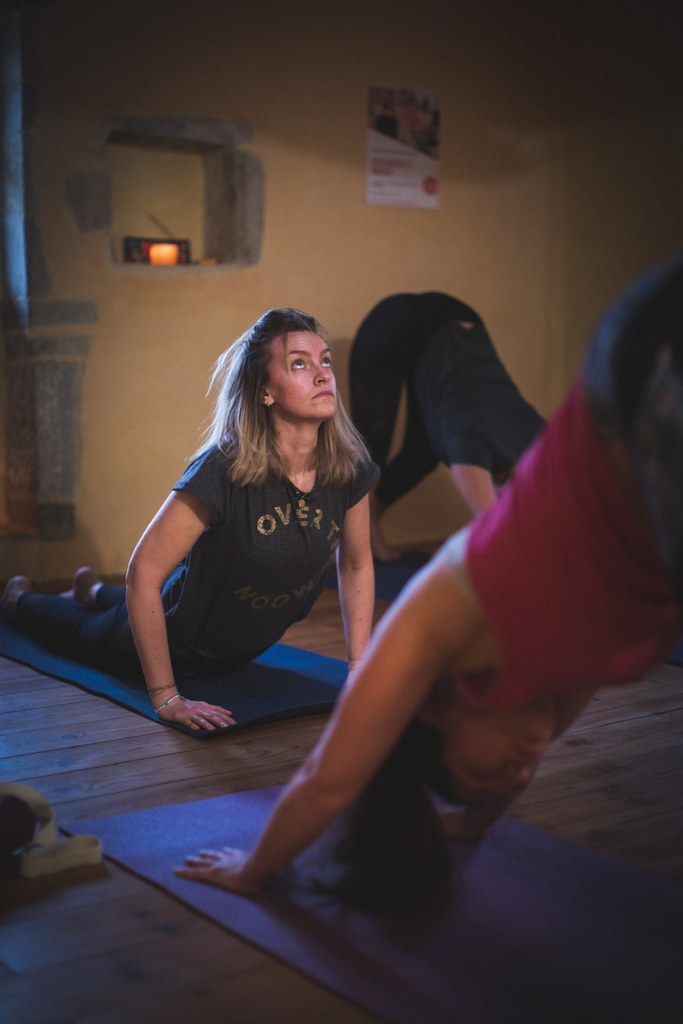
It is through the rhythm and assiduous repetition of the same postures that one can deepen their practice, explore its effects and reach a meditative state in motion. Ashtanga Vinyasa Yoga, when practiced according to its principles, combines power, relaxation and self-knowledge.
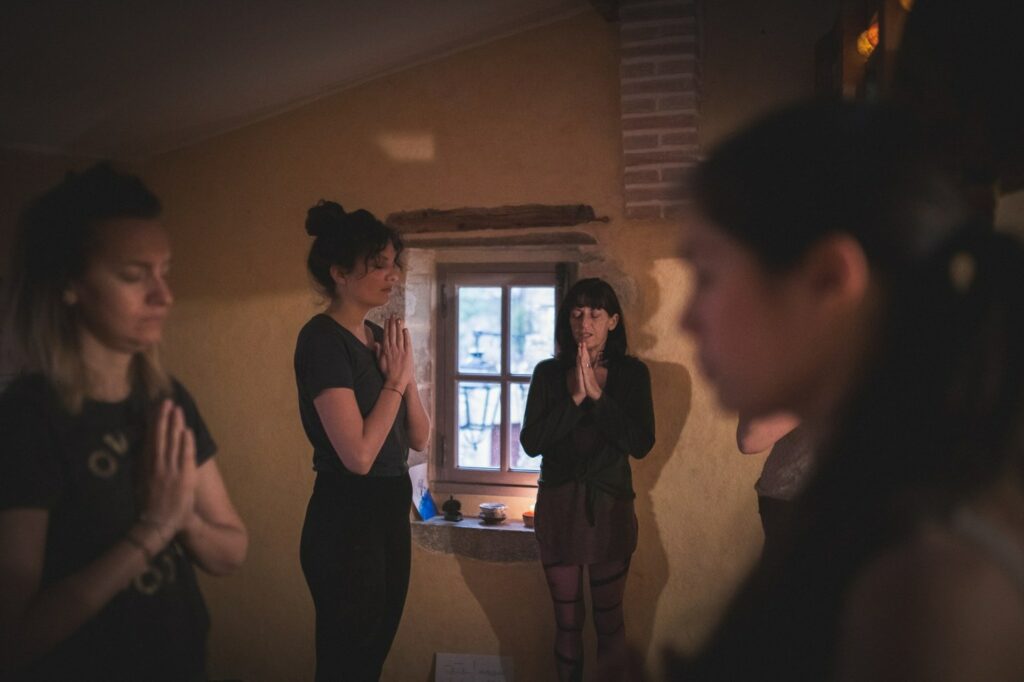
Each practice opens with the opening mantra Vande Gurunam recited in Sanskrit to center oneself, thank those who have passed down the teachings of yoga and honor Patanjali, the author of the Yoga Sutras. The closing mantra Swasthi Praja Bhya at the end of the class, is recited to wish for peace and happiness in the world: Shanti, Shanti, Shanti.
Ashtanga in Mysore style
A yoga taught in a special way
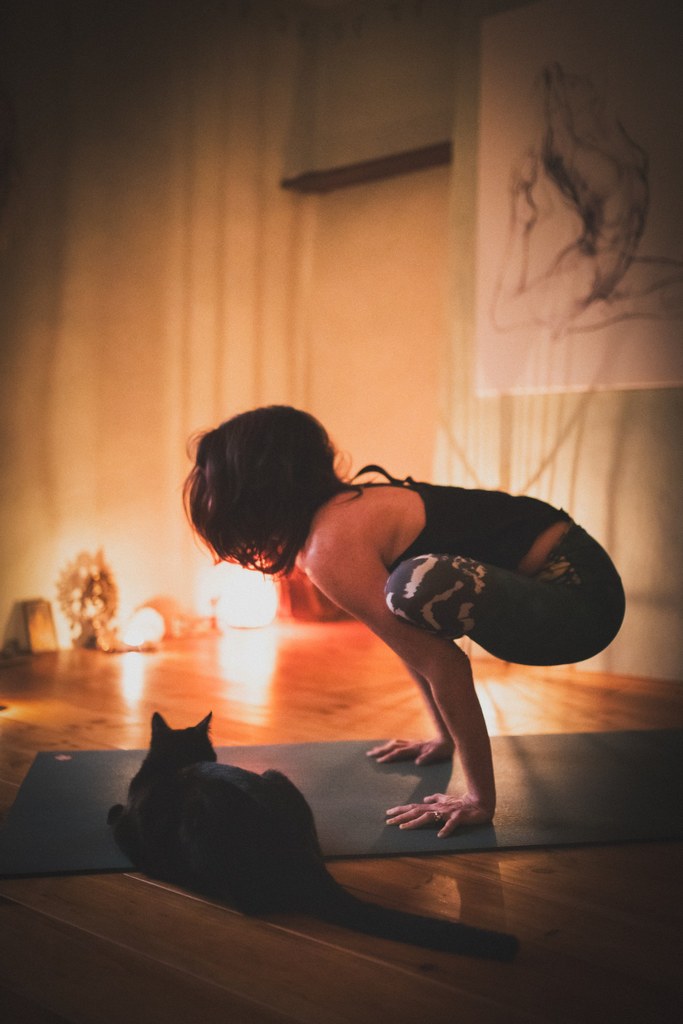
Teaching Mysore style is the original and traditional way of teaching Ashtanga Vinyasa Yoga, where each student practices independently with the energy of the group, according to his own pulse. The practice unfolds as one performs the postures they have become familiar with, in the proper order.
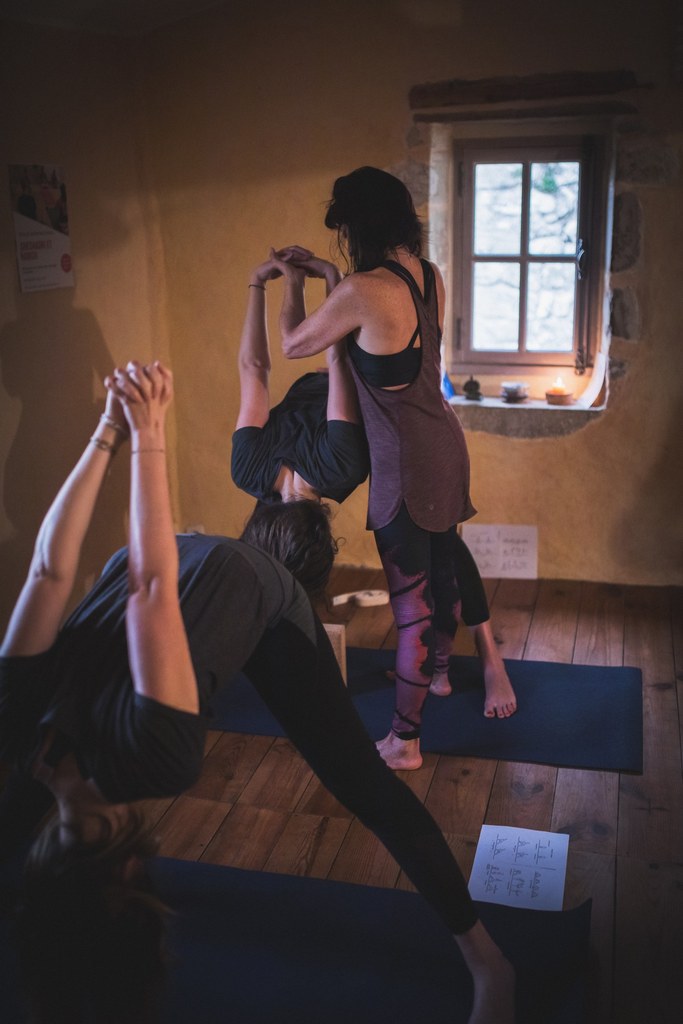
In a Mysore class, the atmosphere is silent, and not all students perform the same postures at the same time. As a result, you can see both beginners and very experienced practitioners, depending on each person's experience. The teacher circulates around the space to observe and support each practitioner in their individual evolution, offering new postures, variations and personalized adjustments according to their capabilities (injury, general condition).
Mysore Style teaching is suitable for all levels, so you can be introduced to Ashtanga through this traditional teaching method, which provides the freedom and immediate opportunity to practice at home independently, in complete autonomy!
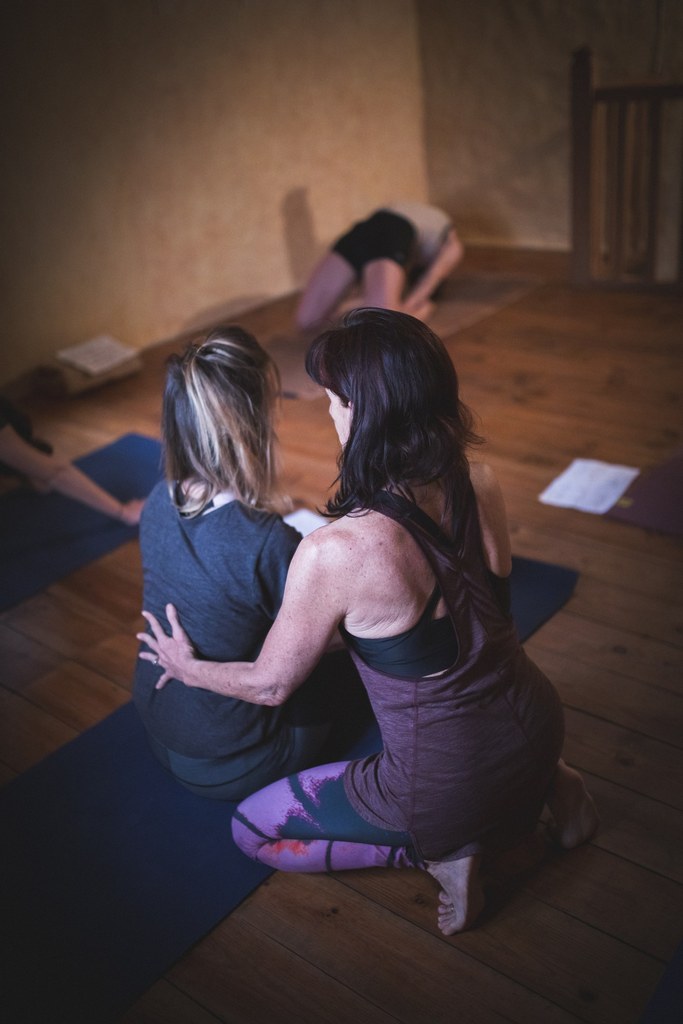
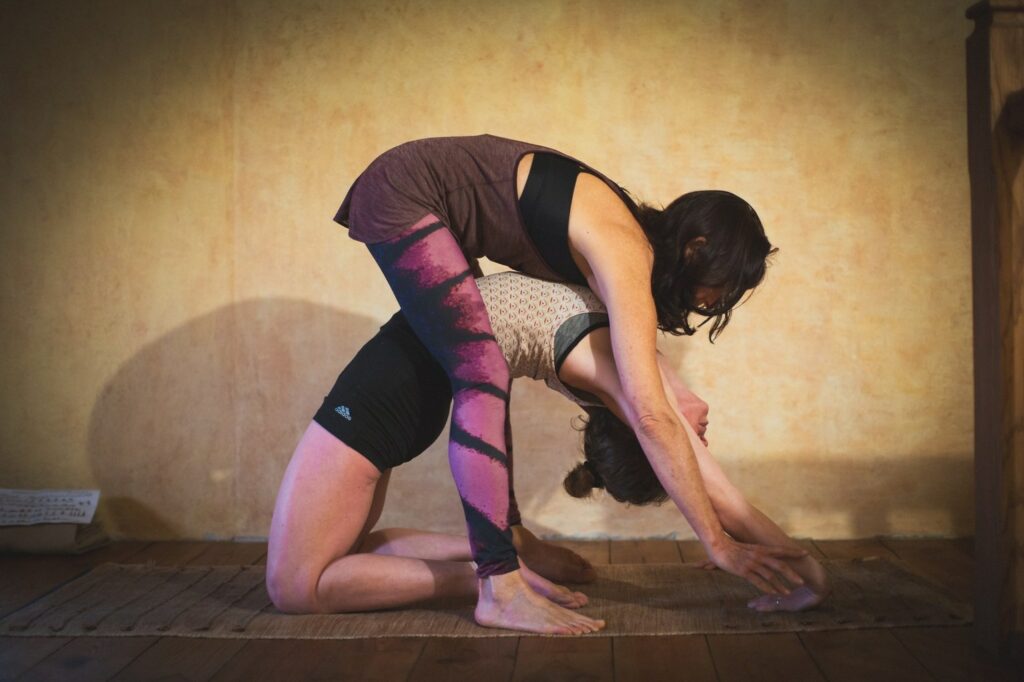
Ashtanga Vinyasa Yoga has also been taught in Led Classes Since its development in the West, i.e. like other forms of yoga: the teacher guides the practitioner by naming the postures and giving instructions for performing them at a general tempo identical for all. In Ashtanga, the series is often led by counting the movements and breaths in Sanskrit (Ekam, Dve, Trini, etc.) and by naming each pose in Sanskrit (Ado Muka Svanasana, Kurmasana, Prasarita, etc.).
Regular classes
Ashtanga Vinyasa Yoga - Led Class
- Monday 8h30-10h00
Ashtanga Vinyasa Yoga – Mysore Style
- Thursday 8h30-10h00
- Friday 12h-13h30
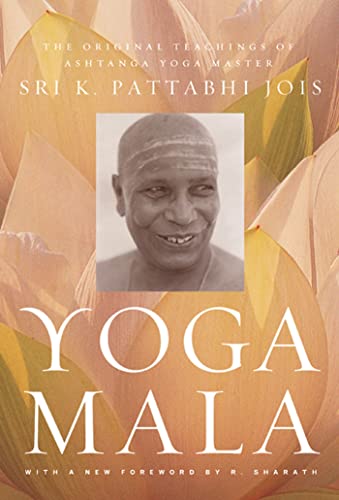
« Mala is a Sanskrit term that means garland. In India there are many different kinds of malas. There are japamalasmade up of sacred beads strung on a thread which are used in prayer for counting and keeping focused on the repetition of the mantra. Il y a les pushpamalaswhich are garlands of vivid flowers to deities in homes and temples. Jois here offers another kind of malawhich is ancient in tradition, as sacred as a prayer, and as fragrant as flowers. His mala is a garland of yoga, in which each vinyasa is like a sacred bead to be counted and focused on, and each asana est comme une fleur parfumée accrochée sur le fil du souffle. Tout comme le japamala adorns the neck and a pushpamala adorns the gods, so too does this garland of yoga, when diligently practiced, adorn our entire being with peace, health, radiance, and ultimately, self-knowledge » (Eddie Stern, forword, p. 19).
— Pattabhi Jois, 2006, Yoga Mala
Guide and seminal work from the living master of yoga ashtanga
Dangles Editor, Saint-Jean-de-Braye (1st edition 1962).
The transmission of theAshtanga Vinyasa Yoga method was taken up by the founder's grandson Sharath Jois à Mysore en Inde jusqu’en 2024.
I also teach
The Yin Yoga
The Yin Yoga is a static form of yoga, performed to a meditative musical background, consisting of a succession of postures (generally on the floor), each held for several minutes.
It's in the immobility of the body, through the action of time and gravity, that deep work occurs on the physical plane (deep muscles, the fascias), the breath (amplification) and the mind (observation and welcoming of thoughts).
It is an invitation to dive into time, to savor the moment, a practice of presence, patience and letting go. While it may seem gentle, yin is a practice with profound physiological and psychological effects; it can serve as a foundation for all forms of yoga, be practiced on its own, or be used as a complementary practice, particularly in conjunction withAshtanga Yoga.